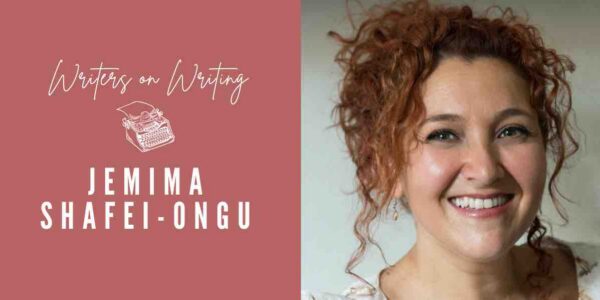
Writers on Writing is our regular conversation with a writer or industry professional about the writing craft, industry insights, and their own practice. This week, we spoke to Jemima Shafei-Ongu about balancing complex themes with hope, working collaboratively, and key considerations for revising children’s books.
Your picture books explore complex themes like identity, ageing, and more. What are your tips for representing serious and complicated themes in ways that are clear and engaging for young readers?
-
Be honest and open in your writing without being dark, ensuring you have an element of hope, and always balance your writing with elements of joy.
-
Be intentional about your language use and how you share concepts, depending on developmental age – reading ‘comparison texts’ to what you’re wanting to write can help familiarise you with this.
-
Remember, children are curious and capable of exploring challenging concepts – trust their intelligence and don’t talk down to them. Difficult information shared in a caring, thoughtful and supportive way, especially with an attuned and attentive adult, can actually help children develop the emotional intelligence and resilience they need to manage difficult feelings.
How have your manuscripts been shaped by the collaboration with illustrators?
Typically, with picture books, the publisher works with the author and illustrator separately to create the final product, and often, the two creators don’t interact with each other.
My manuscripts have been significantly shaped by the collaboration with illustrators. I have been fortunate to work with publishers who have taken the time to ensure sound health and cultural principles with ‘do no harm’ messaging. At times, this meant consulting with sensitivity readers, and I, too, was consulted for my input. It’s important that you work with a trustworthy publisher who understands your work and with whom you can work collaboratively.
All your work features a diversity of characters. How is this important for your young readers?
We are all diverse. However, because we are not all equally or equitably represented in children’s literature, this imbalance needs to be corrected. It is very important to me that young readers of my work have mirrors in which they see themselves, and windows through which they appreciate experiences other than their own.
Our world is a rich and diverse place, so the protagonists in children’s literature should reflect the diverse world in which we live. Not only are diverse voices and experiences essential to ensure we better understand, respect and love one another, but without them, we erase people’s stories, essentially dehumanising them.
What is your advice for writers who have been thinking about starting writing for children, but aren’t sure where to start?
Read kidlit (literature for children). Like literature for adults, children’s genres are varied. Just in the category of picture books, there are several genres including narrative, non-fiction, concept, and call & response (to name a few). For older readers, the genres are just as varied, from junior fiction to young adult novels.
Join online writing communities (many are free), and easily discoverable on the internet, with several offering newsletters that you can sign up to. It was important for me to sign up to groups that shared my values around advocating for children worldwide and championing the well-being of all children and our planet.
Join a critique group. Writing NSW, for example, offers some critique groups, and if you can’t find what you’re looking for, try starting one up with a few like-minded people. There’s a writer’s centre in every state, and they offer a range of resources and workshops.
Most importantly, begin writing! Write whenever you can, even if it’s jotting down ideas in the ‘notes’ section of your phone. Allocate a regular time in your week to write. Leave your work and come back to it with fresh eyes. Revise, revise, revise; it’s where the real writing is!
What are some key considerations you keep in mind when editing and revising children’s books?
I try to remind myself of the following:
- what matters most about the story, why it’s important;
- who my intended reader group is (age and background);
- leave space for illustrations (if it’s a picture book);
- consider the writing style and genre, cadence, grammar, structure and the way I use language (I often use translanguage – the insertion of words in my community languages which rely on surrounding words in English for meaning to be inferred);
- the uniqueness of the work;
- how easy it is to connect to the work;
- the appeal and marketability of the work (in terms of what is already out there).
I also always try to read it to a child/ children to gauge their reaction(s) and share it with trusted critique buddies.
Jemima Shafei-Ongu is a Dharug/Sydney-based writer who is passionate about picture books. She has a professional background in psychology and teaching, and believes in the power of picture books to connect readers, of all ages, through honouring and celebrating diverse cultures and experiences. In her writing, Jemima explores themes of belonging, well-being and inclusion. Some of her writing is influenced by her collectivist heritage, where she explores disrupted connections. Jemima is the author of A Lemon for Safiya (Lothian, Hachette) and Aslan and Benny (Penguin Random House). She also co-authored the picture book Shirin and Amir and the Dragon Smoke as part of a project with the Australian National University to promote inclusive health messaging. She will have additional picture books with Allen & Unwin and Barefoot U.S. publishing within the next two years.
Jemima highly values the critiquing process and believes some of the best reflections happen in these spaces. When she’s not writing, Jemima enjoys long walks by her local river, drawing, watercolour painting, and learning to play the derbakeh. She lives with her partner, their mini schnauzer, and whichever of their three daughters is in the country at the time.
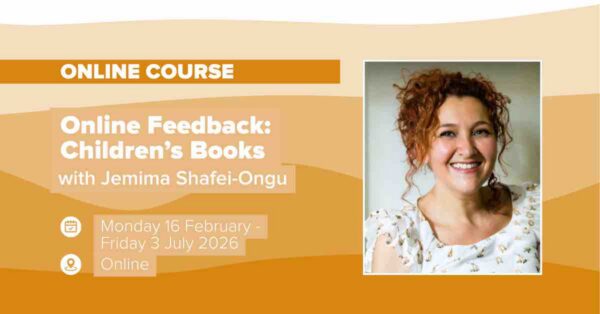
Join Jemima Shafei-Ongu for Online Feedback: Children’s Books, Monday 16 February to Friday 3 July 2026 (5 months), online.
More from Writing NSW
Check out our full range of writing courses in Sydney, our online writing courses and our feedback programs to see how we can help you on your creative writing journey. Find out about our competitions and opportunities, as well as writing groups across NSW, and sign up to our weekly newsletter for writing events, opportunities and giveaways.