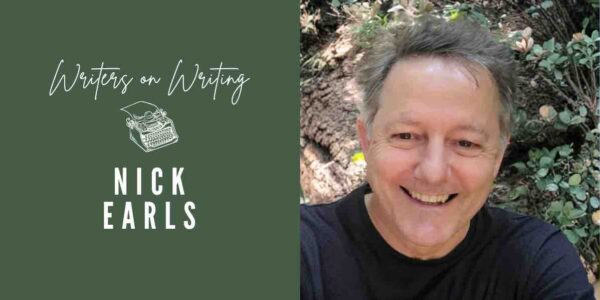
Writers on Writing is our regular conversation with a writer or industry professional about the art of writing, industry insights, and their own practice. This week, we spoke to Nick Earls about reasons to write short fiction, how understanding characters can reveal narrative possibilities, and using detail to trigger action and dialogue.
Why write short fiction instead of (or in addition to) longer form stories?
I think there’s a writing reason and a reading reason. Some story ideas, including some compelling and powerful story ideas, are naturally and most effectively dealt with if they’re contained to something smaller than a novel. It would do a disservice to turn them into something larger artificially, or to lose them in something larger. It also works for readers. Short stories can really have an impact, even if we’re not in them for long. And I think there’s a place in life for a 20-minute read, a two-hour read and a 12-hour read.
How did you know that the stories in your award-winning Wisdom Tree series were more suited to novellas than novel-length works?
It got down to sensing the scope of the ideas when they were still just at the ideas stage. It was maybe 2013, and I was thinking I’d be writing a novel but, when I looked at the piles of ideas I was excited about, wondering which might be my next novel, I realised that the five I really wanted to write all happened to be somewhere between a short story and a novel in scope and depth if I was to get the most out of them. In each case, I would have lost something if I’d trimmed it to a short story or chosen just part of it and made that a short story, and I also knew I’d be padding to make any of them 80,000 words, or dissipating the potential power of the story by putting it in something larger.
When writing your novellas, how do you discover story through developing your characters?
That’s such a key part of the process for me, whatever I’m writing. I was particularly conscious of it when working on the Wisdom Tree novellas, since they felt very character-centred, but I think that always tends to be the case for me, to one degree or another. It took me years to realise something that’s ultimately simple – stories are about their characters so, if we examine our characters, we’ll discover where the stories might take us. Asking questions of our characters creates narrative possibilities, then we, as the author, get to decide which of those possibilities will make for the most interesting story. What does my protagonist want from the present? What do they need from the present? Am I going to give them either of those (or both, or neither), and what’s the most fascinating way there?
It’s easy to get stuck when planning or writing a story – most of us have had the feeling of being stuck some time when staring at narrative ideas and trying to make more narrative ideas – but focusing on characters this way can quicky create possibilities that weren’t there before. It can be hard to make story ideas out of nothing, but stories happen to people. Look at the people and you’ll find the story. This focus on character will be one of the stages of the workshop, using a range of questions to reveal potential story ideas.
How can detail be used as a storytelling tool?
There’s so much to gain through harnessing the power of detail and using it effectively, making it a tool. Details can reveal what a place looks and feels like, but they can do so much more. They can trigger action or dialogue. A character’s internal take on an otherwise innocuous detail (for example, a triggered recollection) can be very revealing. As writers, we go into each scene that we write with some story business to do. We need it to happen, we need it to happen effectively and in an interesting way and, importantly, we need it not to look as though the author needed it to happen. Each moment has to feel as though it comes from the story and the characters. Quite often when I’m asking myself, ‘How do I do that?’ or ‘How do I bring this thought/recollection to the surface?’ a physical detail will be the answer. For example, I’ll find myself thinking, ‘On this stretch of road, I need my protagonist to think this particular thought …’ Can I find a detail (maybe by jumping on Google Maps street view) or make a detail on the roadside that would trigger that thought, so that it seems to happen naturally, and doesn’t look like something the author needed to be there?
Detail is such a powerful tool when we take charge of it. That’ll be a focus of the workshop too.
Some have said that novellas are ‘difficult to sell’. How would you respond to this sentiment?
That’s a sentiment I faced in 2013, and with it I faced a choice: walk away from my five exciting yet-novella-sized ideas or go in boots-and-all, give it four years of my life, investigate the contemporary novella market and publishing practices, develop a new novella series publishing model, write the five novellas to test it, make the necessary publishing relationships to bring it to market and write up the experiment as a PhD. I went for option two.
The basis of the ‘difficult to sell’ idea is that it costs almost as much to make a smallish paper book (a novella) as it does a somewhat larger one (a novel). The thought that follows that is that novellas have to be priced close to the price of a novel. And by weight they then don’t feel like good value for money. So they won’t sell well.
My response to that is a 55,000-word essay, which anyone is welcome to read, but here are a few highlights. There’s a real place in busy modern lives for a 2-3 hour read (it’s an evening away from Netflix, a plane flight from Sydney to Cairns). I put that idea out there in interviews about Wisdom Tree and it kept coming back to me from readers. Novellas now exist on three platforms (print, ebook and audio) and only one of those presents the traditional cost concerns. In 2017-18, I found buyers to resist a $20 price for a print novella, but no resistance at $15. If you’re likely to sell a couple of thousand or more, you can make money at $15.
The model works. It worked in this case, at least. I think it can work more broadly, and I think there’s a reading appetite for works with the length, depth and scope of the novella. I haven’t noticed big publishers embracing the Wisdom Tree model yet, but they’re welcome to download
Nick Earls is the author of 28 books for adults, teenagers, and children. His writing has won awards in Australia, the UK, and US, and appeared on bestseller lists in those countries. His writing for adults includes eight novels, the novella series Wisdom Tree and three short story collections, with his short stories widely anthologised. He has a PhD in creative writing from the University of Queensland. Two of his novels have been adapted into feature films and five into stage plays. Several of his short stories have been adapted into short films.
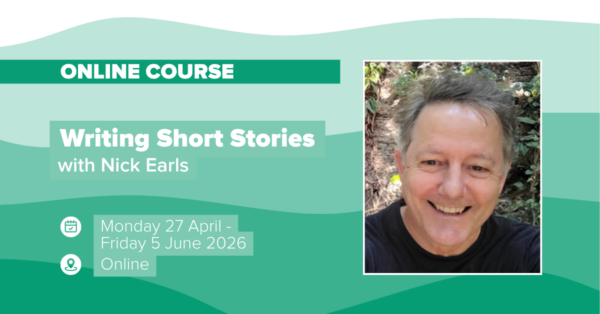
Join Nick Earls for Online: Writing Short Stories, Monday 27 April to Friday 5 June 2026 (6 weeks), online.
More from Writing NSW
Check out our full range of writing courses in Sydney, our online writing courses and our feedback programs to see how we can help you on your creative writing journey. Find out about our competitions and opportunities, as well as writing groups across NSW, and sign up to our weekly newsletter for writing events, opportunities and giveaways.