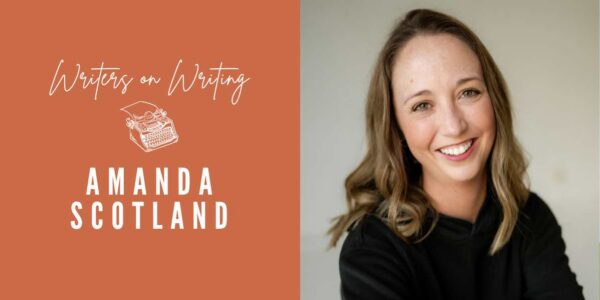
Writers on Writing is our regular conversation with a writer or industry professional about the writing craft, industry insights, and their own practice. This week, we spoke to Amanda Scotland about her journey to flash fiction, what competitive short-form stories have in common, and why flash fiction is still a worthy pursuit for writers of longer-form fiction.
What do you love about flash fiction?
I first discovered flash fiction in 2020, shortly after my life had been turned upside down forever. While out mountain biking, my husband suffered a catastrophic spinal cord injury, and we were grappling with the enormity of the loss. At the time, I’d been putting the finishing touches on my middle-grade novel when, overnight, my creative energy evaporated.
As I gradually became accustomed to my new life, I reconnected with an old friend (now my business partner and podcast co-host, Ed), and together we ventured into the world of flash fiction, beginning with the Australian Writers’ Centre’s Furious Fiction challenge. When everything else seemed impossible, flash became my path back to creativity. After winning Furious Fiction on my third attempt, I was in love.
I now recommend flash to any writer who seeks to nurture that creative spark but finds themselves short on time and energy. (I also highly recommend it to those in the novel-writing trenches who need the occasional dopamine hit to survive!)
As the host and judge of an international flash fiction competition, what have you noticed that most competitive short-form stories have in common?
The biggest thing I’ve learned about competitive flash fiction writing is how subjective the judging process can be! While we do our best to remain impartial, our biases do seep through. I’ve learned that I personally favour stories that deliver emotional connection, whereas other judges might favour a creative concept or evocative prose.
While there’s enormous diversity among winning stories, some notable similarities consistently emerge. Chief among these is the ability to deliver a ‘complete package’ within a tight word count. Stories that take a universal human experience and transmute it into the personal journey of a compelling character tend to do particularly well. You’ll also often hear me banging on about ‘Poe’s Single Effect’, which describes the skill of crafting a story to achieve a single emotional impact. I believe this principle to be at the core of the most emotionally resonant short fiction.
As a judge, I’m also acutely aware of the common mistakes and fatal flaws that hold good stories back. I try to arm our entrants with the knowledge they need to avoid these mistakes, and I’m looking forward to sharing that knowledge with Writing NSW members in my upcoming Write Winning Flash Fiction workshop, too!
How is flash fiction valuable for writers pursuing longer-form writing careers?
Flash fiction is (usually) quick to write and easy to submit, so it can deliver a much-needed confidence boost when you’re in the midst of wrangling a longer work. The process of writing flash can also provide the perfect avenue for honing one’s craft—zooming in on the detail to wring the most out of every sentence.
On a practical level, flash fiction provides opportunities to build your writing resume, which will prove invaluable at query time! Having a few flash fiction competition accolades or publishing credits under your belt is a fantastic way to demonstrate legitimacy to an agent or publisher. This process is something I hope to shed more light on during the workshop.
How does flash fiction differ from longer form fiction?
I could go on about this all day (no, seriously, join me at the workshop and you’ll see!)
There is, of course, a great deal of overlap with the broader art and craft of fiction writing, but there are some key structural differences too.
For example, I typically advise that a piece of flash fiction should span no more than a single scene, with a tight cast of characters and not a single word out of place. Sentences are often required to do double duty—revealing character while advancing the plot. Subtext is huge.
There are, however, some creative freedoms afforded in flash that are rarely afforded in longer form fiction, offering the opportunity to experiment with prose poems, ‘hermit crab’ formats, and second-person points of view.
Amanda Scotland first approached flash fiction as an accessible path back to creativity following a tragic family event which left her critically time and energy-poor. She became an instant devotee when she won the Australian Writers’ Centre’s Furious Fiction competition in August 2021. Since then, she has frequently long-listed in flash and micro fiction competitions, earning publication in titles such as Ellipsis Zine and Nightmare Fuel.
Amanda now hosts and judges her own 500-word international flash fiction competition via the Apple Top 10 ranked podcast, Not Quite Write. Having analysed thousands of flash fiction stories through Not Quite Write, Amanda has developed a keen eye for the elements of compelling flash fiction, and she’s keen to share this knowledge with those looking to fill their writing buckets, one splash at a time.
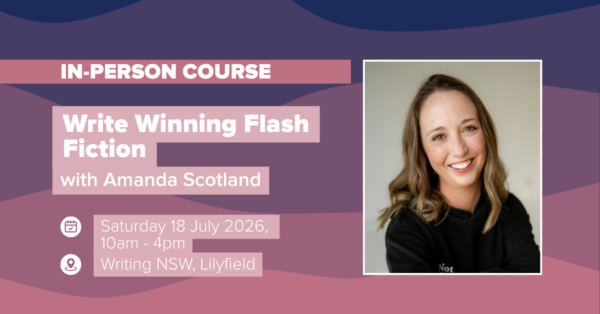
Join Write Winning Flash Fiction with Amanda Scotland, Saturday 18 July 2026, 10am-4pm at Writing NSW, Lilyfield.
If you want to be the first to read great advice, prompts and inspiration from our incredible tutors, subscribe to our weekly e-newsletter Newsbite.
More from Writing NSW
Check out our full range of writing courses in Sydney, our online writing courses and our feedback programs to see how we can help you on your creative writing journey. Find out about our competitions and opportunities, as well as writing groups across NSW, and sign up to our weekly newsletter for writing events, opportunities and giveaways.