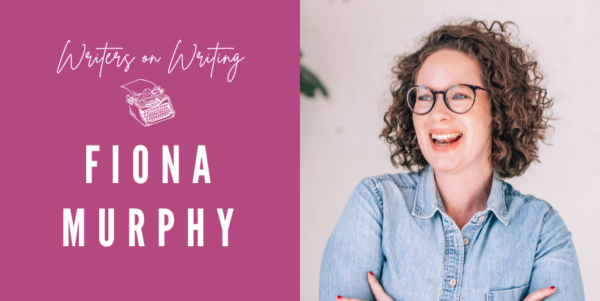
Writers on Writing is our regular conversation with a writer or industry professional about the writing craft, industry insights, and their own practice. This week, we spoke to Fiona Murphy about the vulnerability of personal essays and memoir and how to ask the right questions when seeking feedback.
Your memoir about deafness, The Shape of Sound, was released in 2021 to critical acclaim. Do you have any advice for writers wishing to write about deeply personal subject matter?
It can be an incredibly taxing experience, both creatively and emotionally. Take your time to wade through the mess of memories and emotions in private. Take your time to rest and recover.
And then, when you’re feeling brave, start to think about the subject matter as a book. Call it a draft, a work-in-progress, a manuscript. Create a word document and give it a title. Add page numbers. Create chapters and a table of contents.
It was only when I began to think about my experiences as a manuscript, I established a writerly perspective about the material. With this distance, I was finally able to draft, edit and corral my story into shape.
When writing essays and creative non-fiction, how important is incorporating research and other materials?
Research is inevitable, even if you’re writing about your own life. You may need to research the mechanics of a semicolon. Or look at family photos to jog your memory about the time you had a perm. Or fact check dates, times and locations. The trick is making research appear purposeful on the page. Ideally, it should propel the narrative forward, reveal perspective or enrich the manuscript’s texture.
As an emerging writer, I used to think that I had to understand absolutely everything about a subject before I could start writing. I would labour over research. Sinking whole days and weeks into the process. When I finally got around to writing, I was either bored by the subject or even more intimidated than before.
I finally recognised the immense value about writing from a place of uncertainty. There is a kind of magic of venturing into the unknown. It immediately creates momentum and surprise on the page. Now, I don’t start researching until I’ve mapped out three things:
- What do I already know or assume about this subject?
- What don’t I know about this subject?
- What makes me curious or interested in learning about this subject?
Documenting my existing beliefs, assumptions and curiosities about subjects allows me to create a knowledge map. These maps have guided me out of writer’s block, gently reminding me why I was curious about a subject. They have also provided countless dynamic and authentic ways of framing information. For instance, I could contrast what I used to believe or assume about a subject with whatever I’ve discovered during the research process. This suddenly reduces the risk of writing an information dump and instead creates an opportunity to reveal my character/perspective.
Sharing and discussing work can feel vulnerable at the best of times, but arguably more so when it comes to personal essays and memoir. Do you have any advice on how to approach this process?
Feeling vulnerable about your work can indicate that you’ve created something important, something that you’re excited about. However, relinquishing this work can feel painful. Unfortunately, if you are seeking publication you will have to navigate the process of receiving feedback.
Prior to studying creative writing, I had no idea that seeking and receiving feedback was a skill. Until that point, I simply lobbed writing drafts at my siblings and friends. The resulting feedback alternated being frustratingly vague and excruciatingly specific. Neither was very useful. It made me dread seeking feedback.
Thankfully, Lucy Treolar taught me how to ask for feedback. The process places you firmly in a position of comfort and control.
Step 1: Become clear on what feedback you want or need. For instance, you might consider requesting feedback on dialogue, pacing, structure, tense, punctuation, voice, characterisation, metaphorical language, paragraphing, narrative tension.
Step 2: Pick just two or three topics that you’d like feedback on, any more may overwhelm or confuse you.
Step 3: Ask the person giving you feedback to focus on these topics. Give them permission to ignore everything else.
The very process of considering and selecting the type of feedback you want is truly magical. It gives you a slight editorial detachment, as you will be forced to consider your writing on a craft level. It also psychologically prepares you for receiving the feedback. You’ll no longer be afraid that the person will simply say it’s “good” or “bad”. Instead, you’ll receive marvellously focused feedback.
Fiona Murphy is an award-winning writer, editor and arts critic. She has been widely published, including in The Guardian, ABC, The Saturday Paper, Griffith Review, The Big Issue. In 2021, her memoir, The Shape of Sound was released in Australia, New Zealand, UK and North America. It was highly commended in the Victorian Premier’s Literary Awards. She regularly lectures on creative writing and facilitates creative writing workshops. She is a MacDowell Fellow (2022) and Peter Blazey Fellow (2024).
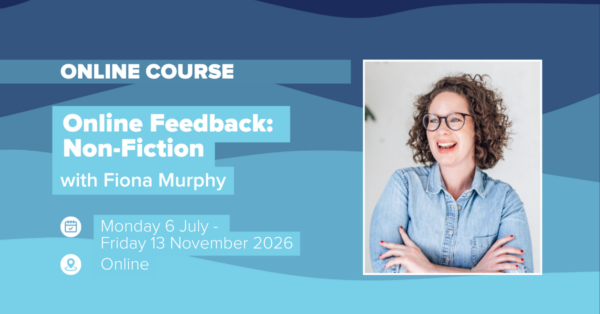
Join Fiona Murphy’s course, Online Feedback: Non-Fiction, Monday 6 July 2026 to Friday 13 November 2026
(5 months), online
If you want to be the first to read great advice, prompts and inspiration from our incredible tutors, subscribe to our weekly e-newsletter Newsbite.
More from Writing NSW
Check out our full range of writing courses in Sydney, our online writing courses and our feedback programs to see how we can help you on your creative writing journey. Find out about our competitions and opportunities, as well as writing groups across NSW, and sign up to our weekly newsletter for writing events, opportunities and giveaways.